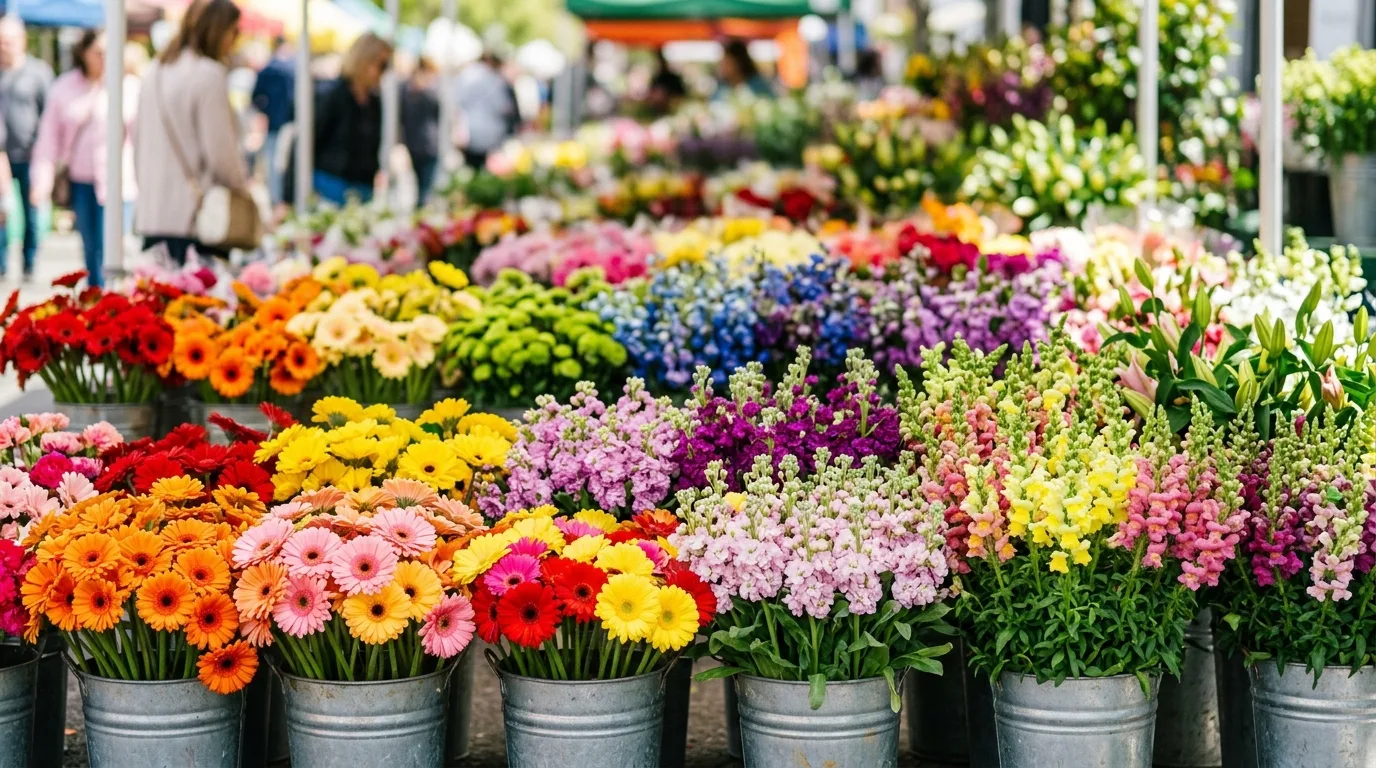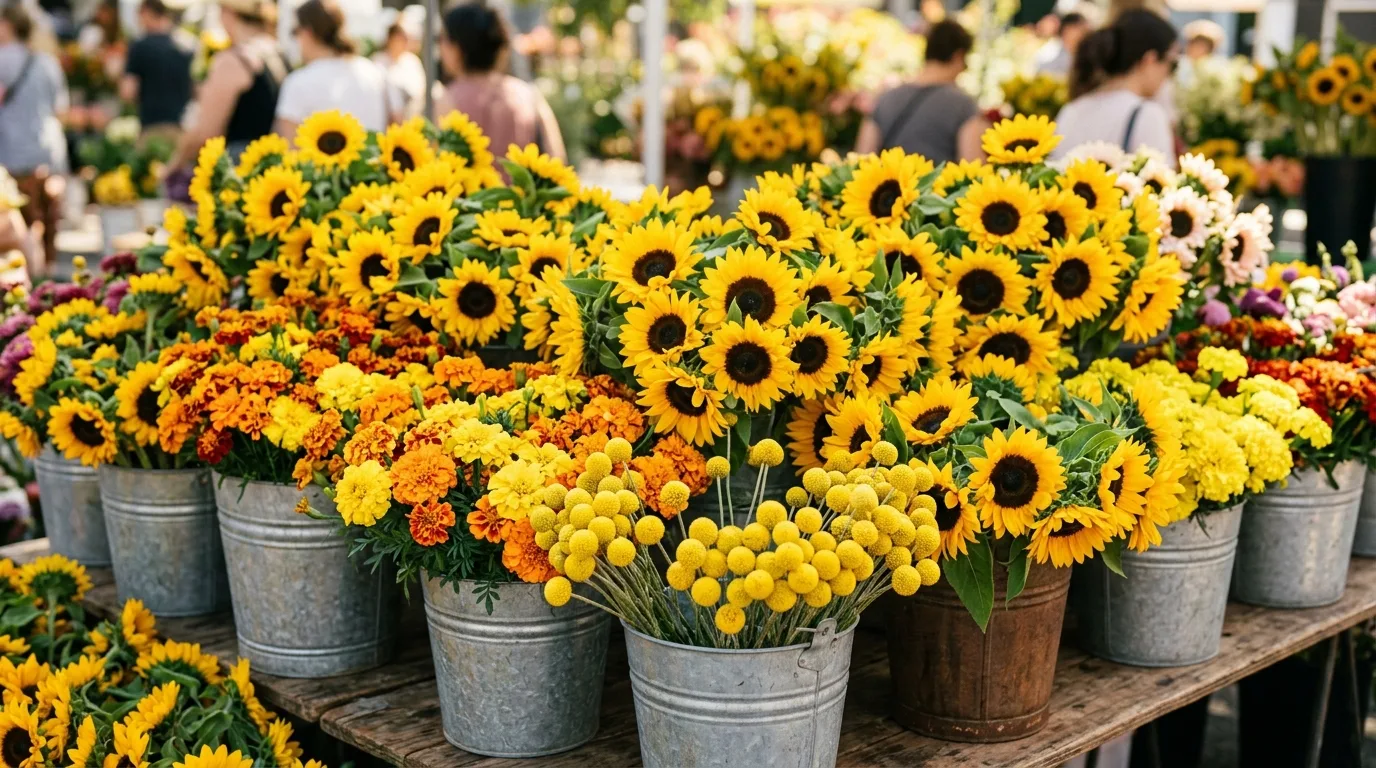
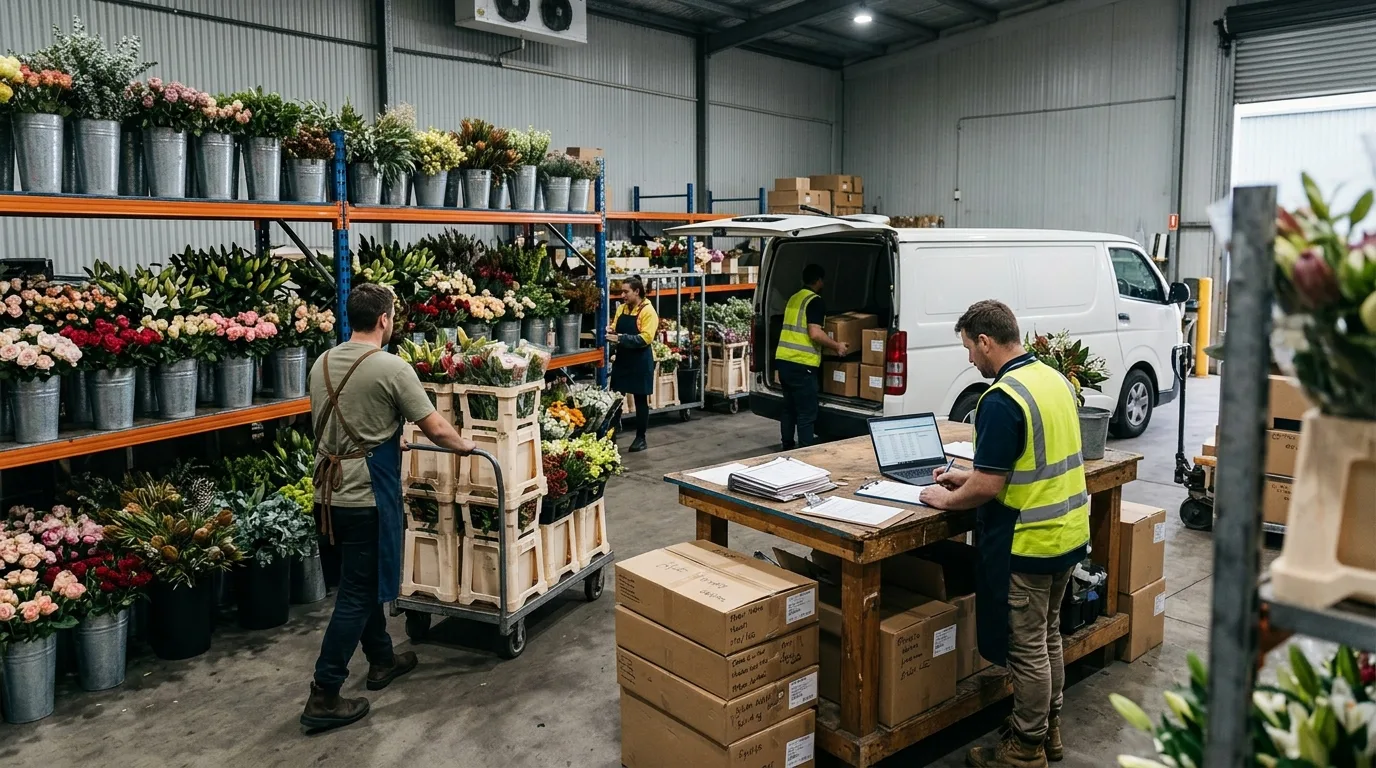
Peak season for a flower wholesaler is not a problem you can hire your way out of. You can add staff, extend hours, and put everyone on the phones - and still spend Tuesday afternoon untangling a pile of contradictory orders from florists who each sent their requirements in a different format, via a different channel, with varying levels of detail.
Flower wholesaler order management during event season is one of those operational problems that looks like a communication problem on the surface. Underneath, it's a systems problem.
This piece is about what the chaos actually costs, why it's predictable, and how wholesalers who've gotten on top of it have approached the problem.
What "Peak Season Chaos" Actually Looks Like
If you run a flower wholesale operation that services event florists, you know what the lead-up to spring looks like. Orders start compressing. Timelines shorten. Florists who are calm and organised in February are stressed and reactive in October.
At peak volume, a wholesale operation might be receiving orders via:
- Email (multiple formats - some line-item, some paragraph, some just a list with no quantities)
- Phone calls (quantities noted by hand, often while managing three other things)
- WhatsApp or SMS (no consistent format at all)
- In-person conversations at the floor
None of this is standardised. Every florist has their own template, their own shorthand, their own level of detail. The wholesaler's team has to translate all of it into something actionable - picking lists, stock allocations, delivery schedules.
The translation step is where errors happen. Not because the staff are careless. Because the input is inconsistent and the volume is high.
The Real Cost of Inconsistent Order Intake
The direct cost of an intake error is easy to see: wrong stems pulled, florist receives incorrect order, re-delivery or credit required.
The indirect costs are harder to quantify but often larger:
Re-confirmation time. When an order is ambiguous - unclear quantity, missing variety, no specified grade - someone has to call or message the florist to clarify. At peak season that's multiple clarification calls per day, during the exact time when your team should be focused on fulfilment.
Inventory planning errors. If you're buying flowers to fulfil event orders, inconsistent intake means you're estimating from incomplete data. You overbuy varieties you don't need. You underbuy varieties that are about to cause problems.
Relationship strain. When a florist receives an incorrect order the day before an event, the relationship takes damage. Even if it's corrected - the next time they're choosing a supplier, they'll remember.
Staff stress. Inconsistent, high-volume intake during peak season is genuinely difficult to manage. Staff who are constantly switching between decoding messages and chasing confirmations are not working efficiently, and the pressure accumulates.
Why This Problem Scales Badly
A wholesaler servicing 10 regular florists can manage inconsistent intake formats through familiarity. You know how each florist orders. You know their shorthand. You can fill in the gaps from experience.
At 30 florists, that institutional knowledge breaks down. You're receiving orders from florists you don't know as well, in formats you haven't seen before, for event types with specific requirements you haven't dealt with. The cognitive load of decoding and translating becomes unmanageable.
And the nature of event floristry means mistakes have higher stakes. A retail florist short on gerberas on a Tuesday morning can substitute and move on. An event florist short on peonies the morning of a 200-person wedding cannot.
A Better Approach to Wholesale Order Intake
The wholesalers who handle peak season well have two things in common: they've standardised their intake format, and they've built a confirmation process that closes the loop before delivery day.
Standardise the input
The single most effective change a wholesaler can make to their order intake is to require orders in a consistent format. Not because you're being difficult - because it directly reduces errors and the time spent resolving them.
A standard order should include, at minimum:
- Event date
- Delivery date and address
- Each variety as a separate line item
- Quantity (stems, not bunches, unless agreed)
- Colour/grade specification
- Any known substitution preferences
When every order comes in with the same fields, your team can process it without translation. The cognitive load drops. The error rate drops.
Confirm at the line level, not the order level
A blanket "order received" response to a florist is not a confirmation. It tells them their email arrived. It doesn't tell them that every line has been checked against available stock.
Line-level confirmation - even a simple "confirmed / substitution required" against each item - changes the nature of the exchange. It catches the unavailable variety before delivery. It creates a record of what was agreed. It shifts the conversation from "what happened?" after an error to "here's what we flagged" before it.
This is more work per order. It's less work across the full week. For how this plays out from the florist's side, see why florist-to-wholesaler communication breaks down on event orders.
Practical Steps for Managing High-Volume Event Order Intake
Step 1: Audit your current intake channels
How many different ways are florists currently sending you orders? Which formats create the most re-work? Start there.
Step 2: Create a standard order template and share it with your florist clients
Make it easy for them to use - a simple format that covers all the fields you need. Most florists will adopt it if it means fewer clarification calls on their end too.
Step 3: Assign intake processing to a dedicated role during peak season
Don't let order intake be something everyone does between other tasks. Someone should own it, process it consistently, and flag issues immediately.
Step 4: Build a daily confirmation cycle
All orders received by a cut-off time (say, 5pm) should have a line-level confirmation sent before the close of business. Any substitutions or unavailables flagged in that same message.
Step 5: Maintain one consolidated order record per florist per week
Avoid having order information spread across emails, phone notes, and WhatsApp threads. A consolidated record per florist - ideally one that both parties can see - prevents the "what did we actually agree?" conversation.
Step 6: Track fulfilment status explicitly
Ordered, confirmed, picked, packed, dispatched. Each stage should have a clear status. Not in someone's memory. In a record.
Where a Shared Order Platform Changes the Dynamic
The operational problem here is not that wholesalers lack effort or care. It's that the current intake system - fragmented, multi-channel, format-inconsistent - is structurally incapable of handling high-volume event orders without errors.
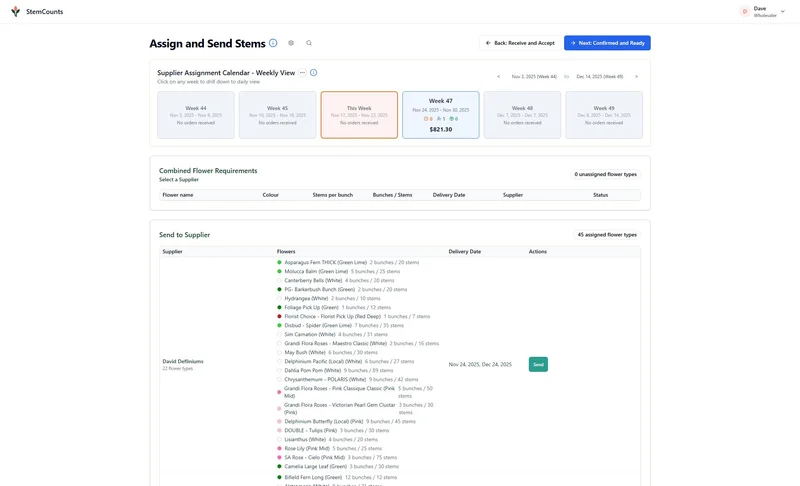
A shared order management platform changes the intake problem by removing the format inconsistency at the source. When florists submit orders through a structured workflow, every order arrives in the same format, with the same fields. There is no translation step.
StemCounts operates on exactly this model - florists plan and submit orders through a structured interface, and wholesalers receive them in a consistent format ready for confirmation. Line-level confirmation flows back through the same system. Both parties have visibility on the same record, throughout the order lifecycle.
The result isn't a perfect system. Availability issues still happen. Events still change. But the framework for managing those issues is clear, shared, and traceable - which is the difference between a manageable peak season and a chaotic one.
Conclusion
Flower wholesaler order management during peak season is hard because the problem is structural, not operational. No amount of extra effort fixes a system where every florist sends orders differently, confirmations happen in scattered threads, and status is tracked in someone's head.
The wholesalers who handle event season well aren't better at managing chaos. They've built intake processes that reduce chaos before it starts. Standardised formats, consistent confirmation, shared records.
It's not a dramatic change. It's a disciplined one - and the difference it makes to a peak-season week is significant. Wholesalers who invest in order experience also see measurable improvements in florist loyalty - covered in how wholesalers can improve florist retention through better order experience.
Give your florists an easier way to order.
Florists plan and send their orders in StemCounts. You get every order in one list, ready to confirm line by line. Free for wholesalers.