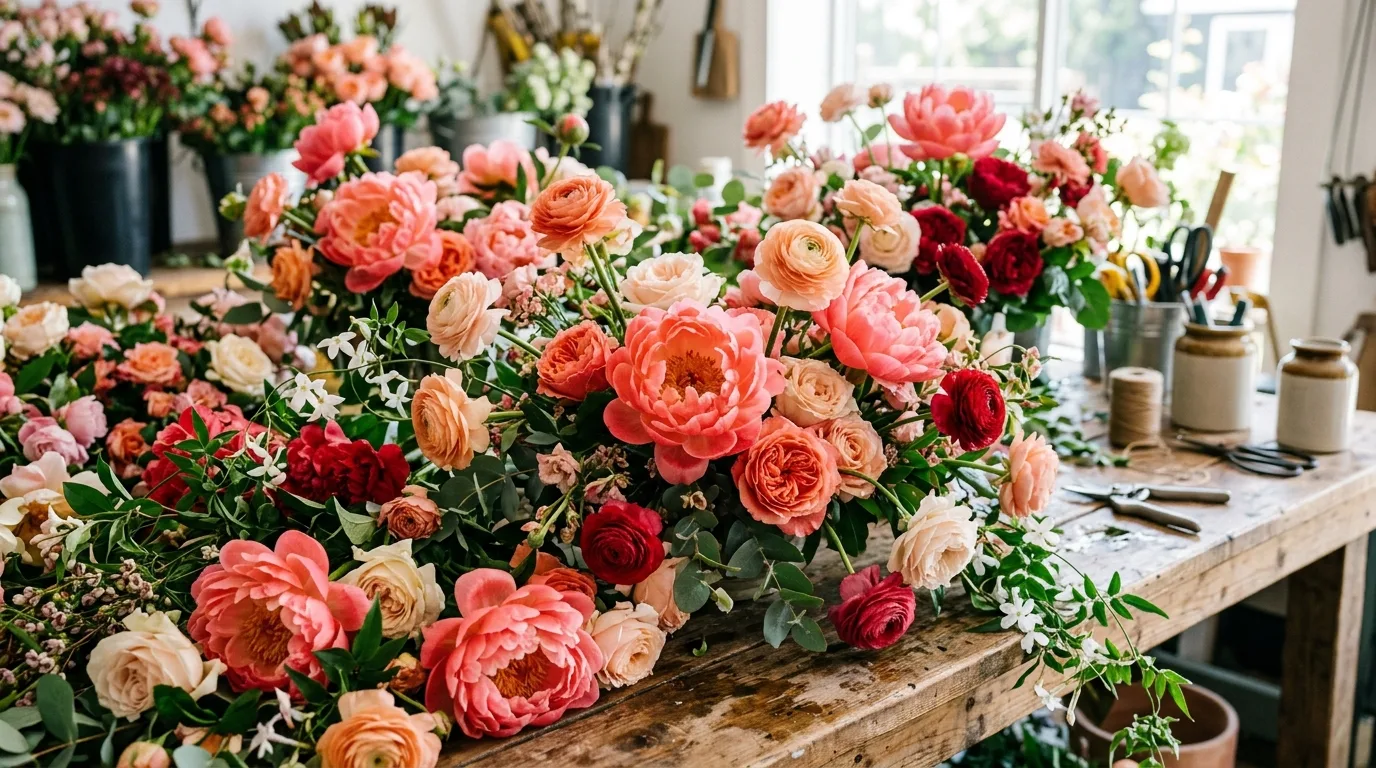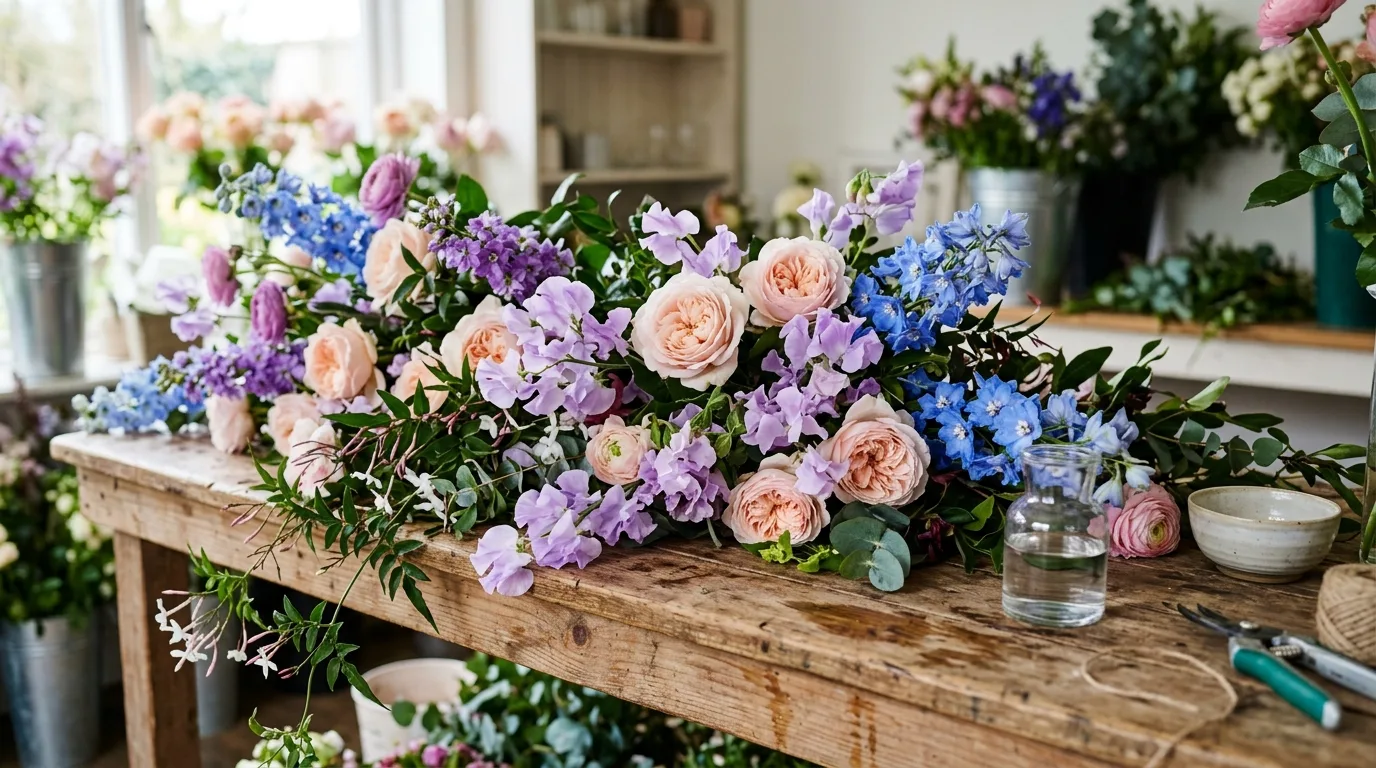
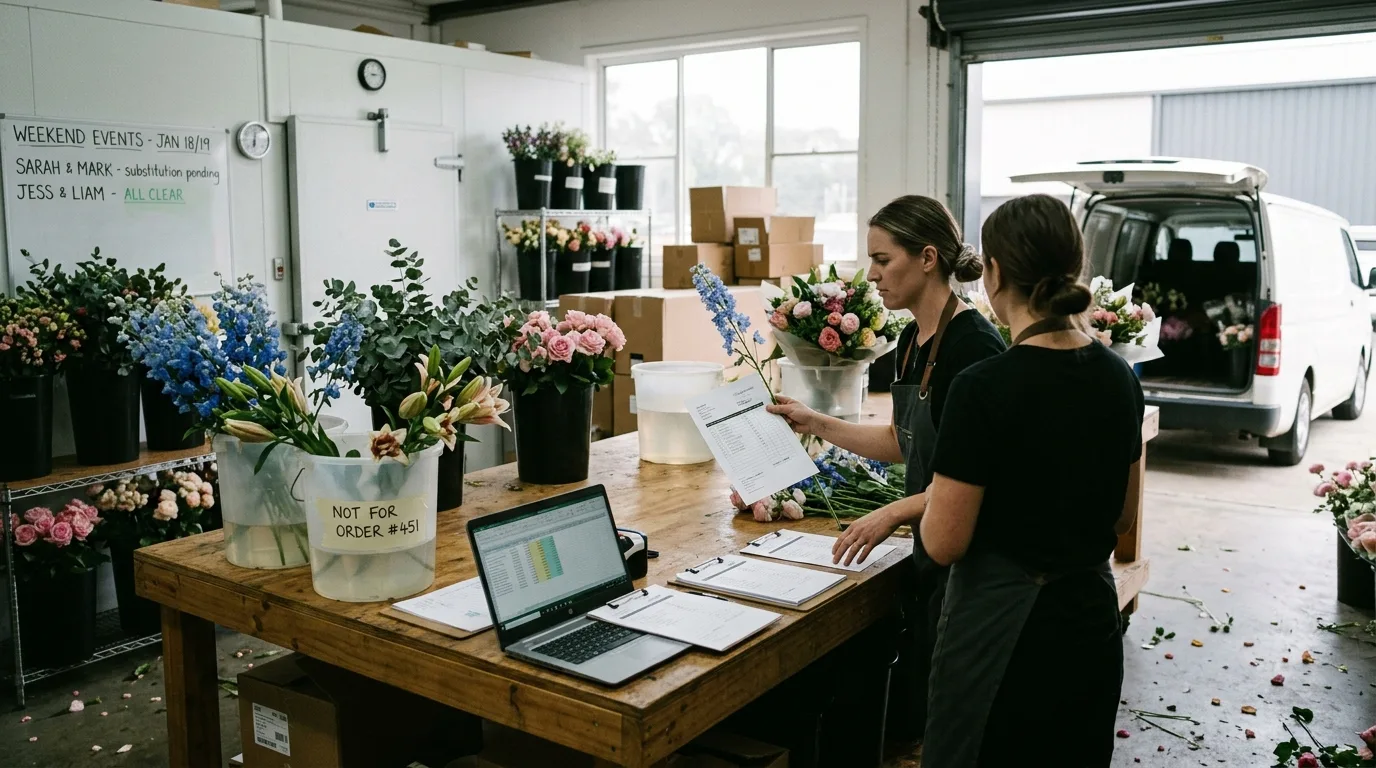
Substitutions are part of floristry. Flowers are an agricultural product - seasonal, weather-dependent, supply-constrained. Any experienced florist knows that the variety in the brief isn't always the variety in the delivery.
The problem isn't substitutions. It's how they're handled.
A flower substitution on an event order that is flagged early, discussed properly, and agreed in writing is a non-event. The same substitution discovered when the delivery arrives at 6am on a Saturday morning is a crisis. Same substitution, completely different outcome - entirely determined by process.
Why Substitutions Happen in the First Place
Understanding why substitutions occur helps you anticipate and manage them more effectively.
Seasonal availability. Even with careful planning, some varieties are genuinely seasonal. A variety that was available when the brief was written may not be available on the delivery date.
Import delays and crop issues. Many premium floristry varieties are imported. Shipping delays, quarantine holds, or crop failures at the source can reduce availability with little warning.
Grading issues at the market. Flowers arrive from growers at a particular grade. If the stock that arrives at the wholesaler doesn't meet the specified grade - open too early, blemished, too short-stemmed - they may not pass the quality standard you've specified.
Booking timing. A wholesaler may not be able to hold stock indefinitely. If a variety was available when you enquired but another buyer secured the stock before your order was confirmed, it's gone.
Weather. Heatwaves, frosts, and unusual conditions affect local and imported supply. Peak summer and peak wedding season overlap for a reason - and demand spikes into constrained supply.
None of these are supplier failures in the ordinary sense. They're features of a supply chain that deals in living, perishable, weather-sensitive agricultural products. The expectation that substitutions won't happen is the problem, not the substitutions themselves.
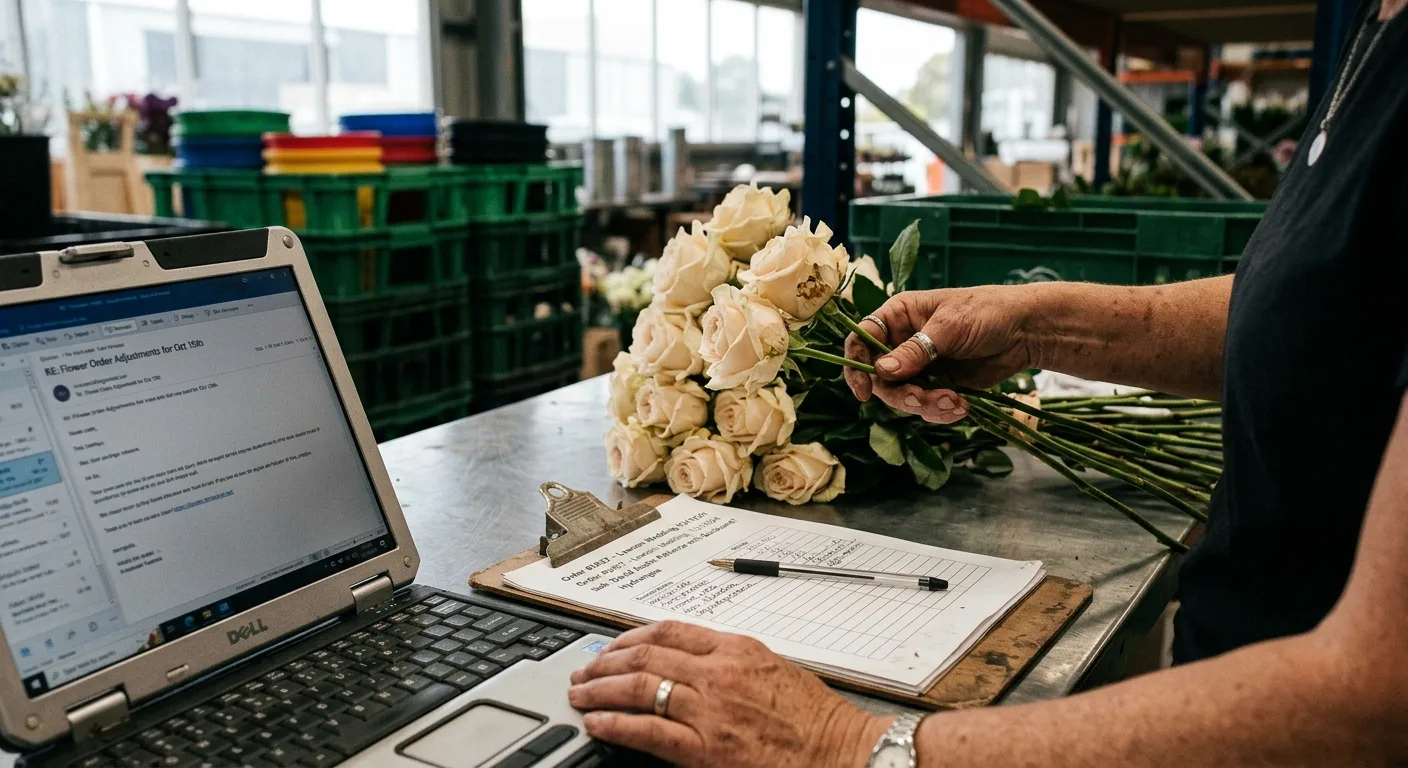
The Broken State: How Most Substitutions Are Currently Managed
In the typical event order workflow, substitution management goes roughly like this:
- Florist sends order
- Supplier processes order (at some point in the next few days)
- Supplier discovers a variety is unavailable during picking
- Supplier substitutes with something broadly similar
- Delivery arrives; florist discovers the substitution
- Florist makes do, because there are no other options at this point
This process is almost entirely reactive, and it concentrates the information at exactly the wrong time - when the florist has no leverage and no options.
The variation that makes it slightly worse: the supplier mentions the substitution in passing during a confirmation call, the florist doesn't write it down, and on delivery day no one can agree on what was agreed.
What a Good Substitution Process Looks Like
A good flower substitution process on event orders inverts the above: the conversation happens early, the agreement is documented, and by delivery day there are no surprises.
Pre-authorised substitutions: agree the rules before the order
Before placing a large event order - particularly for specialty or imported varieties - have a conversation with your supplier about substitution parameters. This conversation should happen as part of your confirmation process - see what good supplier confirmation looks like in event floristry. What can substitute for what, at what quality level, under what conditions?
This conversation doesn't need to be exhaustive. It needs to cover your high-risk lines: the varieties most likely to have availability issues, the ones where the design is most dependent on a specific look, and the ones where any substitution will require client communication.
A simple pre-authorisation framework:
- Approve/reject by category: "Any garden rose in blush to soft pink tones is acceptable." "No substitutions on the garden roses - they're a hero flower for this event."
- Quantity flexibility: "If you can only supply 80% of the quantity, I'll accept it; below that I need to know immediately."
- Grade floor: "If stock doesn't meet premium grade, flag it before substituting."
A supplier who has your substitution parameters can make better decisions in the picking room and can contact you earlier when something is outside those parameters.
The substitution notification standard
When a substitution is required, the supplier should notify you with:
- What was ordered (variety, quantity, grade)
- What is unavailable and why (briefly)
- What substitution is being proposed (variety, quantity, whether the same or adjusted)
- When you need to respond by
Not "hey we're short on peonies, sending something else." That's not a substitution notification. It's a text message.
The detail matters because it's what allows the florist to make a real decision - not just accept the swap because there's nothing else to do.
The florist's response: assess the design impact first
When you receive a substitution proposal, resist the instinct to just say yes. Run it through the design first:
- Does the substitute variety have the same visual weight in the arrangement?
- Is the colour match close enough?
- Are stem lengths and conditioning requirements similar?
- Does the substitute variety have a different vase life that might affect pre-event prep timing?
- If the quantity changes, does that affect the arrangement balance?
These are five minutes of checking that prevent a design problem you'd otherwise only discover while building arrangements the night before the event.
Document everything, in context
Every agreed substitution should be captured in writing, attached to the relevant order. Not in a separate email. Not in a side message. Against the order line itself. This is part of a broader framework for how florist-to-wholesaler communication works for event orders.
This matters because:
- It's the record you refer to if the delivery doesn't match what was agreed
- It's what you use to explain the substitution to the client, if required
- It's the basis for any credit or adjustment if the substitute doesn't meet the agreed standard
Communicating Substitutions to Your Client
Not every substitution requires client communication. A like-for-like variety swap within a clear colour palette is often invisible to the client and irrelevant to the outcome.
The substitutions that require communication:
- A change to a hero or feature variety that the client specifically requested or approved
- A colour shift that is outside the agreed palette
- A quantity reduction that affects the density or scale of an arrangement
When you do communicate a substitution to a client, frame it from expertise - not apology. You are the professional. You have managed this. The outcome will still be beautiful.
"The garden roses I had planned are not available this week at the quality I expect - I'm using a comparable variety that works equally well in this design" is a professional communication. "Something went wrong with the order" is not.
The difference is whether the florist has actually assessed the substitution and can stand behind it - which is only possible if the substitution was handled early enough to allow that assessment.
Timing: When the Substitution Conversation Needs to Happen
The value of a substitution decreases rapidly as delivery day approaches.
- One week out: The florist has time to source an alternative supplier, adjust the design if needed, and communicate calmly with the client. Full range of options available.
- Three to four days out: Some options remain. An alternative supplier may still be able to supply. Design adjustment is possible. Client communication is manageable.
- Day before delivery: Very limited options. The florist takes what they can get.
- Delivery morning: No options. The florist uses what arrives.
A supplier who flags a substitution issue early gives the florist the full range of problem-solving options. A supplier who flags it late is not giving the florist a substitution - they're giving them a fait accompli.
Where Order Management Tools Help
The substitution process above is entirely achievable through disciplined email and phone communication. It requires the florist to establish clear expectations with their supplier, maintain good records, and follow up proactively.
The limitation is visibility. When order lines and substitution conversations live across email threads, WhatsApp messages, and phone notes, the record is fragmented. Finding the agreed substitution at 5am on delivery morning is harder than it should be.
A platform that tracks order lines and substitutions in a unified record - where both the florist and supplier see the same state - removes the search step entirely. The substitution is there, attached to the line it relates to, visible to both parties.
StemCounts tracks this at the order line level, precisely because substitution disputes ("I thought we agreed on X") are one of the most common and most damaging friction points in the florist-wholesaler relationship.
Conclusion
Substitutions in event floristry are not problems to be eliminated. They're operational realities to be managed.
The management is simple in principle and requires discipline in practice: pre-authorise your substitution parameters, require early notification from your supplier, assess each substitution against the design before agreeing, document everything in context, and communicate proactively with clients when the substitution is material to the outcome.
The florists who handle substitutions well aren't lucky - they don't get fewer substitutions than anyone else. They've built a process that catches them early and resolves them without drama.
That's the standard. And it starts with a conversation with your supplier well before delivery day.
Spend your time on flowers, not spreadsheets.
Plan the week's flowers, for the shop or for a wedding, and send them to your wholesaler as one order or event by event.